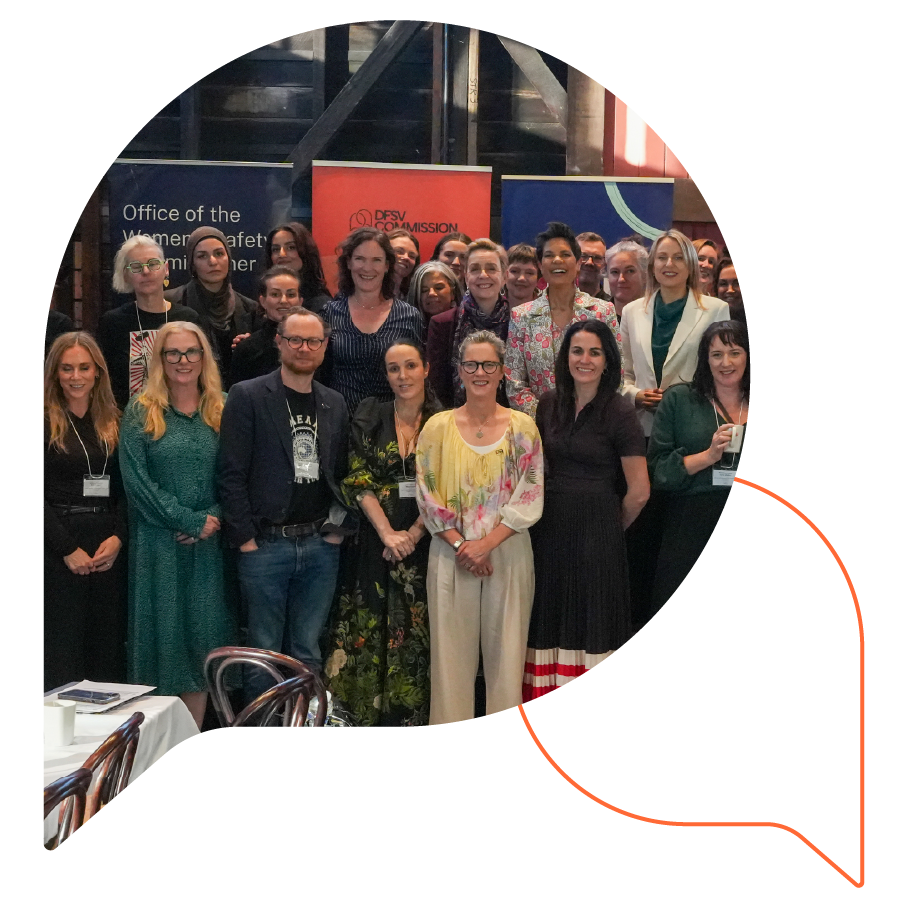
On 5 August 2026, The Federal Domestic, Family and Sexual Violence Commission, the Office of the NSW Women’s Safety Commissioner and Our Watch came together to convene a national media roundtable to foster improvements in media reporting of domestic, family, sexual and other forms of gender-based violence (DFSV/GBV).
The roundtable brought together more than 60 participants, including media industry and regulatory leaders, journalists, lived experience representatives, researchers, practitioners and government leaders to explore opportunities for strengthening media reporting on DFSV/GBV while maintaining press freedom.
The discussion aimed to inform broader national efforts to improve media practice and public understanding of violence, as well as to identify practical reforms, collaborative opportunities and priorities relevant to the Second Action Plan.
Joint statement
The media plays an important role in shaping how Australians understand domestic, family, sexual and GBV, and in contributing to the national effort to prevent it.
When reporting is accurate, trauma-informed and respectful, it can support victim-survivors, challenge harmful attitudes and help prevent GBV. When reporting lacks context, reinforces stereotypes or compromises the dignity and safety of victim-survivors, it can compound harm and undermine prevention efforts.
We heard clearly that improving reporting cannot be the responsibility of individual journalists alone. Lasting change requires a coordinated, system-wide approach, combining strong leadership, capability building, greater accountability and stronger complaints mechanisms, lived experience expertise and ongoing collaboration across the media ecosystem.
The roundtable demonstrated a strong appetite to build on the significant work already underway and turn this discussion into sustained, coordinated action across the media ecosystem. By continuing to work together, we can strengthen reporting that is respectful, accurate and grounded in prevention, and harness the power of the media to help prevent GBV.
We thank everyone who contributed their expertise, experiences and perspectives to this important discussion, and look forward to building on this work together.
Micaela Cronin
Domestic, Family and Sexual Violence Commissioner
Dr Hannah Tonkin
NSW Women’s Safety Commissioner
Patty Kinnersly
CEO, Our Watch
Introduction
Participants highlighted that improving reporting standards cannot be achieved by journalists alone and requires coordinated action across the broader media ecosystem, including media organisations, regulators, governments, specialist organisations and people with lived experience.
Strong themes emerged around the need to strengthen trauma-informed reporting practices, improve newsroom culture, increase accountability and complaints mechanisms, and ensure people with lived experience have greater agency and influence in how stories are told. Participants also stressed the importance of moving beyond incident-based reporting towards prevention-focused reporting that better reflects the social, cultural and structural drivers of violence, challenges harmful narratives and supports violence prevention.
There was broad agreement that meaningful and sustainable change will require a coordinated, system-wide approach that combines leadership, capability building, accountability, lived experience expertise and ongoing collaboration across sectors. The roundtable identified a strong opportunity to build on existing work and partnerships to support nationally consistent improvements in media practice and public discourse relating to DFSV/GBV.
What we heard
Areas to explore
Throughout the day, the diverse and varied issues and opportunities for action were raised by attendees, which have been summarised under the following themes:
- Workplace and newsroom culture change
Drive systemic change through leadership and whole-of-organisation approaches to addressing the drivers of violence and the role of media and reporting.
- The justice system, legislation and impacts
Strengthen understanding among journalists, victim-survivors and governments of the justice system, legislation and legal restrictions, and address unintended impacts that cause harm.
- Regulation, accountability and complaints
Improve the consistency and effectiveness of accountability mechanisms, public awareness of complaints pathways, and the integration of community feedback.
- A coordinated and systematic approach
Improve reporting standards through sustainable funding, capacity building, editorial leadership and coordinated action across the broader media ecosystem.
- Evidence-based, trauma-informed reporting grounded in prevention
Centre the lived experience, dignity and safety of people, improve reporting on perpetrators and provide context on why violence occurs.
- Challenge stereotypes and prioritise inclusion
Reflect diverse experiences, particularly those groups that experience the most harm.
The following section of this report explores each of these themes. In keeping with the intention to document and share current, varied perspectives on improving media reporting on GBV, the report does not represent a consensus among participants but rather explores current challenges and opportunities.
Discussion
1. Workplace and newsroom culture change:
‘Changing culture has a huge impact, and it’s important to address the leaders in newsrooms, senior journos, news directors and chiefs of staff, but in a collaborative way.’
- Participant
Discussions highlighted the influence of newsroom leaders, senior journalists and editors in shaping editorial decisions and organisational culture. For example, leaders and editors generally drive headlines and framing, rather than individual journalists. There was also discussion of how traditional perceptions of newsworthiness can, at times, conflict with trauma-informed reporting practices.
It was highlighted how increased commercial pressures, newsroom culture and the need to generate digital engagement can contribute to sensationalist coverage of GBV.
Participants broadly agreed that strong commitment from editors and other leaders within media organisations will be critical to embedding meaningful cultural change. Participants identified
a range of activities that media organisations could adopt to affirm this commitment.
A number of opportunities were raised in the discussion for media leaders, education providers and organisations to strengthen reporting on domestic, family, sexual and GBV and support broader cultural change within the media sector. Key priorities included strengthening leadership accountability, and fostering newsroom cultures that encourage collaboration, ethical decision-making and responsible reporting.
It was also suggested that newsrooms should place greater emphasis on public interest journalism, violence prevention, and responsible reporting, rather than prioritising clicks, sensationalism, incident-driven coverage, and narrow definitions of newsworthiness.
More broadly, participants highlighted the value of workplace initiatives that promote gender equality, respect and anti-racism, with the aim of preventing sexual harassment, GBV, and racial and cultural discrimination within media organisations.
2. The justice system, legislation and impacts:
‘I would like national trauma-informed legislation around all forms of violence in all contexts incorporating privacy laws… that protects the memory of dead women and children.’
- Participant
The need to strengthen understanding among journalists, victim-survivors and governments of the justice system, legal process and reporting restrictions to support safer and more effective reporting on GBV was highlighted. Legal constraints were raised as a barrier to best-practice reporting on GBV in some instances. Discussions focused on improving legal literacy among journalists, editors, victim-survivors, and governments, including greater understanding of defamation, contempt, privacy, identification restrictions, and other legal obligations that shape reporting practices. Attendees discussed how legal constraints disproportionately impact people with lived experience and restrict their ability to tell their stories.
Discussions also considered how perpetrators may misuse defamation laws and other legal mechanisms as a form of coercive control, particularly in cases involving sexual violence. Some participants also highlighted the potential value of legislative reform where existing laws may unintentionally contribute to harm or restrict victim-survivors from safely sharing their experiences.
There was strong consensus among participants that victim-survivors need to be better supported to understand their rights when speaking to media, including how legal restrictions may shape how their story is told. Participants identified informed consent as critical to support victim-survivor’s agency and reducing the risk of compounding trauma.
3. Regulation, accountability and complaints processes:
‘Media regulation is broken in Australia... It is fragmented, messy and confusing’
- Participant
During the day, the importance of press freedom was raised while also calling for more effective accountability mechanisms, including consideration of regulatory approaches relating to reporting on domestic, family, sexual and gender-based violence. Specifically, it highlighted the need for clearer expectations for media organisations, stronger consequences for breaches, and greater responsiveness to community critique of poor reporting practices to improve media standards.
There was general agreement that the current state of media regulation in Australia is complex and difficult to navigate, with some participants suggesting exploring opportunities to improve coordination across existing systems. Some participants described guidelines on best-practice reporting as insufficient because they are not enforceable. Parties responsible for both receiving and making complaints argued that consequences for harmful reporting are limited. They also raised concern that complaints mechanisms put the onus on victim-survivors to be agents of change.
To strengthen accountability, the need for a cohesive, national approach to regulating media reporting on GBV was raised. It was emphasised that complaint mechanisms should be accessible, transparent and avoid replicating power imbalances experienced by victim-survivors. There were also calls for meaningful consequences for breaches in reporting standards, and for complaint outcomes to be communicated back to newsrooms to ensure continuous improvement.
4. A coordinated and systematic approach:
‘We need an evidence-informed coordinated (and funded) program of work that can go the distance.’
- Participant
Many participants raised the challenge of improving reporting standards as a complex structural issue. It requires long-term investment and a coordinated approach involving multiple stakeholders, including media organisations, regulators, governments, specialist organisations, and people with lived experience.
While this is a complex issue that will require systemic reform, it was recognised that media organisations, editors and journalists had the power to drive more immediate improvements in reporting.
However, it was also noted that government plays a central role in supporting this work through increased investment in a nationally coordinated, evidence-based GBV media initiative. This should include a suite of activities to address the structural drivers of harmful media reporting, including training and support for journalists and reporters. There should also be a focus on research and evaluation to monitor the impact of this work.
Some participants also emphasised the importance of partnerships and collaboration between journalists, people with lived experience, researchers, advocates and media leaders to support sector-wide change. Alongside discussing the need for programs to support the media literacy of audiences, it was raised that there are a range of possibilities for strengthening media reporting on GBV, including funding approaches that encourage gender-equal reporting, supporting trauma-informed and prevention-focused reporting practices, and expanding timely advisory services for journalists covering domestic, family, sexual and GBV.
5. Evidence-based, trauma-informed reporting grounded in prevention:
‘I’d like to see reporting that is more nuanced, contributes to educating the public and plays a more considered role in prevention, not just ad hoc incident-based reporting.’
- Participant
Speakers and attendees advocated for reporting that supports public understanding and prevention of GBV by adopting survivor-centred, trauma-informed and evidence-based approaches. They stressed the need to present the experiences of people affected by violence with greater humanity and nuance.
It was raised numerous times that people with lived experience and the family members of victims need to be given greater agency, consent, dignity and control in storytelling. It was also noted that the impact of traumatic events may mean some victim-survivors and/or family members are not able to provide informed consent to media.
There were many participants who identified practical opportunities for violence prevention organisations, journalists, editors and training providers to strengthen reporting on domestic,
family, sexual and GBV.
For violence prevention organisations, it highlighted the importance of continuing to develop, update and promote evidence-based media guidelines and resources. There was also discussion on creating resources to help victim-survivors and families understand their rights when engaging with the media, enabling them to make informed decisions about whether and how to share their experiences. The discussions emphasised the importance of incorporating lived-experience expertise into the design, review, and delivery of media guidelines, resources, and training.
For journalists and editors, it emphasised the importance of trauma-informed and victim-survivor-centred reporting practices that prioritise dignity, respect, agency and safety. Suggestions included adopting ongoing consent practices; providing greater transparency about journalistic processes, legal obligations, fact-checking requirements and how stories will be told; enabling survivors to have greater control over the use of their stories. There were repeated suggestions for a 24-to-48-hour delay in publishing the names and photos of homicide victims to allow families time to be notified. Participants further highlighted the importance of recognising children as victim-survivors in their own right and discussed the value of prioritising investigative, prevention-focused reporting rather than incident-driven or sensationalised coverage.
There was considerable discussion about reporting on perpetrators. It was noted the importance of examining perpetrators’ behaviours, patterns of abuse and accountability, while avoiding narratives that excuse, minimise or glorify violence. Some participants expressed concern that reporting which emphasises a perpetrator’s status, achievements or perceived ‘good character’ can diminish the experiences of victims and survivors and reduce accountability for the violence.
To better support journalists in their reporting, there was discussion on expanding the availability of evidence-based newsroom training, including training on trauma-informed reporting and managing vicarious trauma. Some suggested embedding this content within journalism degrees and other relevant tertiary education programs, alongside ongoing professional development for media workers.1 Participants also considered practical support mechanisms, including a dedicated advisory service or 24-hour phone line that journalists could access for guidance when reporting on domestic, family, sexual and GBV.
6. Challenge stereotypes and prioritise inclusion:
‘Reporting on Aboriginal and Torres Strait Islander women and LGBTQI people is either absent or is victim-blaming.’
- Participant
It was highlighted that there is a need for reporting on domestic, family, sexual and GBV that is more respectful, inclusive and better reflects diverse experiences.
Speakers and participants raised how media reporting can reinforce racism and harmful assumptions about minority groups, particularly Aboriginal and Torres Strait Islander peoples and multicultural communities. This includes implied stereotypes in reporting, deficit-focused narratives, and emphasis on details about the victim that could be seen as victim-blaming. Participants challenged journalists to consider whether all detail in stories is genuinely in the
public interest.
Attendees repeatedly spoke to the importance of humanising victims and survivors of violence and avoiding reducing them to sensationalist headlines or stereotypes.
The importance of strengthening anti-racist, intersectional and culturally responsive approaches to reporting and violence prevention was also raised. Suggestions included ensuring media coverage reflects the diversity of experiences and communities affected by violence, adopting strengths-based approaches when reporting on violence against Aboriginal and Torres Strait Islander women and children, and incorporating lived-experience expertise into the development of resources and training. Participants also discussed the value of anti-racism initiatives that promote equality within workplaces and contribute to violence prevention.
Where to from here
There was consensus that the media plays a critical role in shaping public understanding and responses to domestic, family, sexual and GBV. While responsible reporting can support prevention and drive positive social change, harmful coverage can undermine victim-survivor recovery, weaken prevention efforts, and exacerbate violence.
There is a clear need for consistent, respectful reporting practices that reinforce the unacceptability of DFSV/GBV. As co-convenors, we will encourage relevant partners (including media organisations, journalists and editors) to continue and scale up their efforts across the broader ecosystem, as well as continue to progress this work under the Second Action Plan of the National Plan to End Violence against Women and Children 2022-2032. This would build on existing investment, while strengthening and expanding the work to support a more coordinated and sustained approach to media reporting on GBV.
Success will require the support of governments and specialist organisations, as well as commitment and action across the broader media ecosystem. Collectively, we can harness the power of media reporting to help put an end to GBV in our community.
View the Summary Report
Endnotes
1 Some funded efforts already exist to support this approach. Our Watch’s media program, funded since 2014, works with lived experience advocates, journalists, editors, and industry bodies to deliver training, capacity building, resources, and university curricula that improve reporting practices, and is funded through the National Plan to End Gender-based Violence. The Centre for Journalism and Trauma has likewise been instrumental in promoting trauma-informed, culturally aware journalism and supporting journalists to manage the effects of trauma exposure.
2 September 2026